
Understanding Surah Al-Fatiha, Verse 1
(Alhamdulillahi Rabbil 'alamin)
"Alhamdulillah."
It is perhaps the most common phrase on the tongue of a believer. We say it when we receive good news, after we sneeze, when we finish a meal, and even when we face a difficulty. It is so deeply woven into the fabric of a Muslim's life that its immense, universe-shaking meaning can sometimes become a gentle whisper, overshadowed by habit.
In English, it is most often translated as "All praise is for Allah" or “Praise be to Allah.”
This phrase is not just a word of thanks; it is the very first verse of the Quran's opening chapter, Al-Fatihah. It is the opening statement of the believer's dialogue with Allah. It is the core of a worldview. This post is an invitation to dive deep into the ocean of "Alhamdulillah," to explore its grammar, its spiritual power, and its practical application, so that the next time we say it, our hearts can resonate with its true, transformative power.
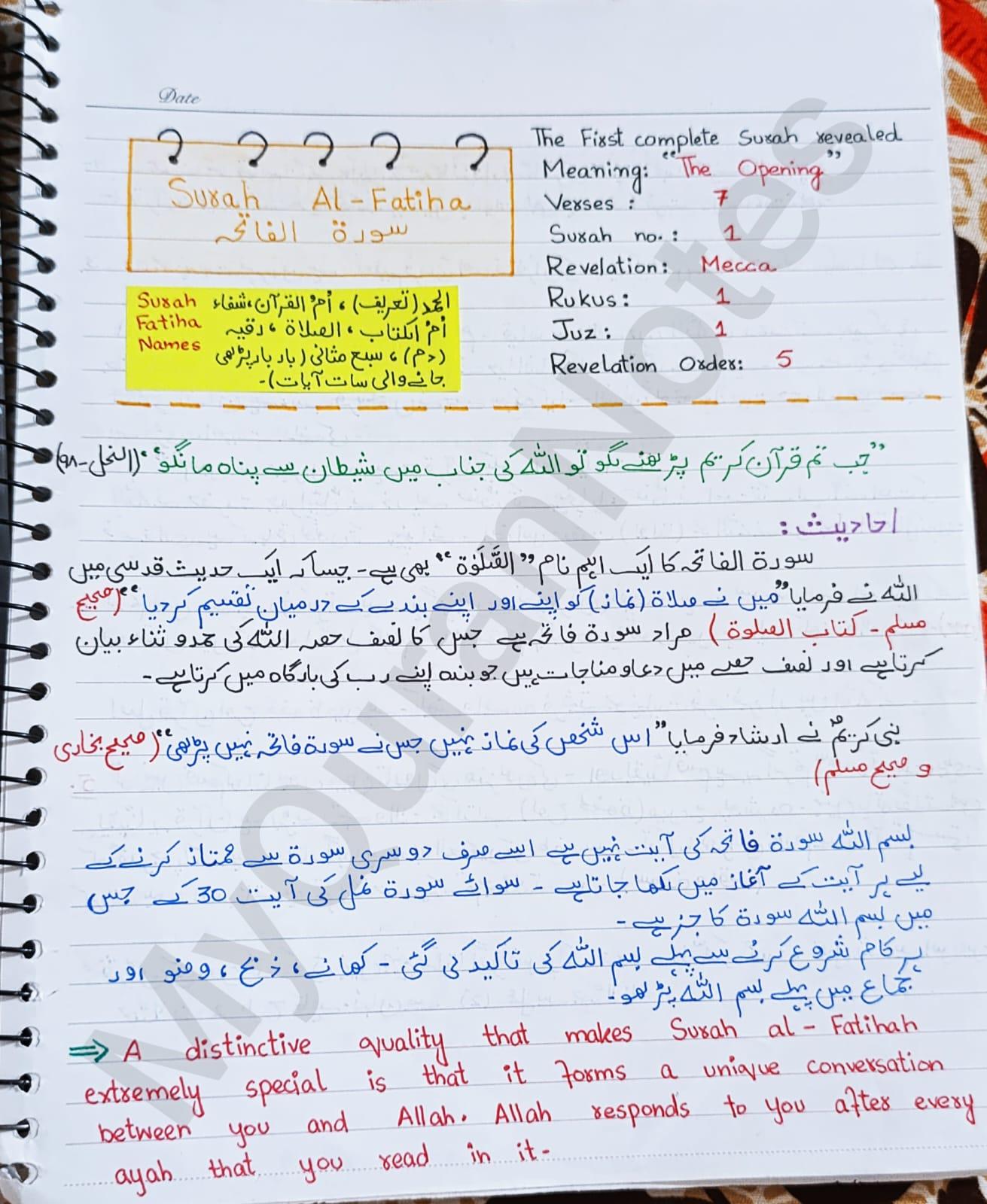
Surah Fatiha - Ayah no 2, Tafseer Notes
The Foundation - What Does "Alhamdulillah" Actually Mean?
To understand "Alhamdulillah," we must break it down linguistically. Arabic is a language of precision, where a single word can contain entire worlds of meaning.
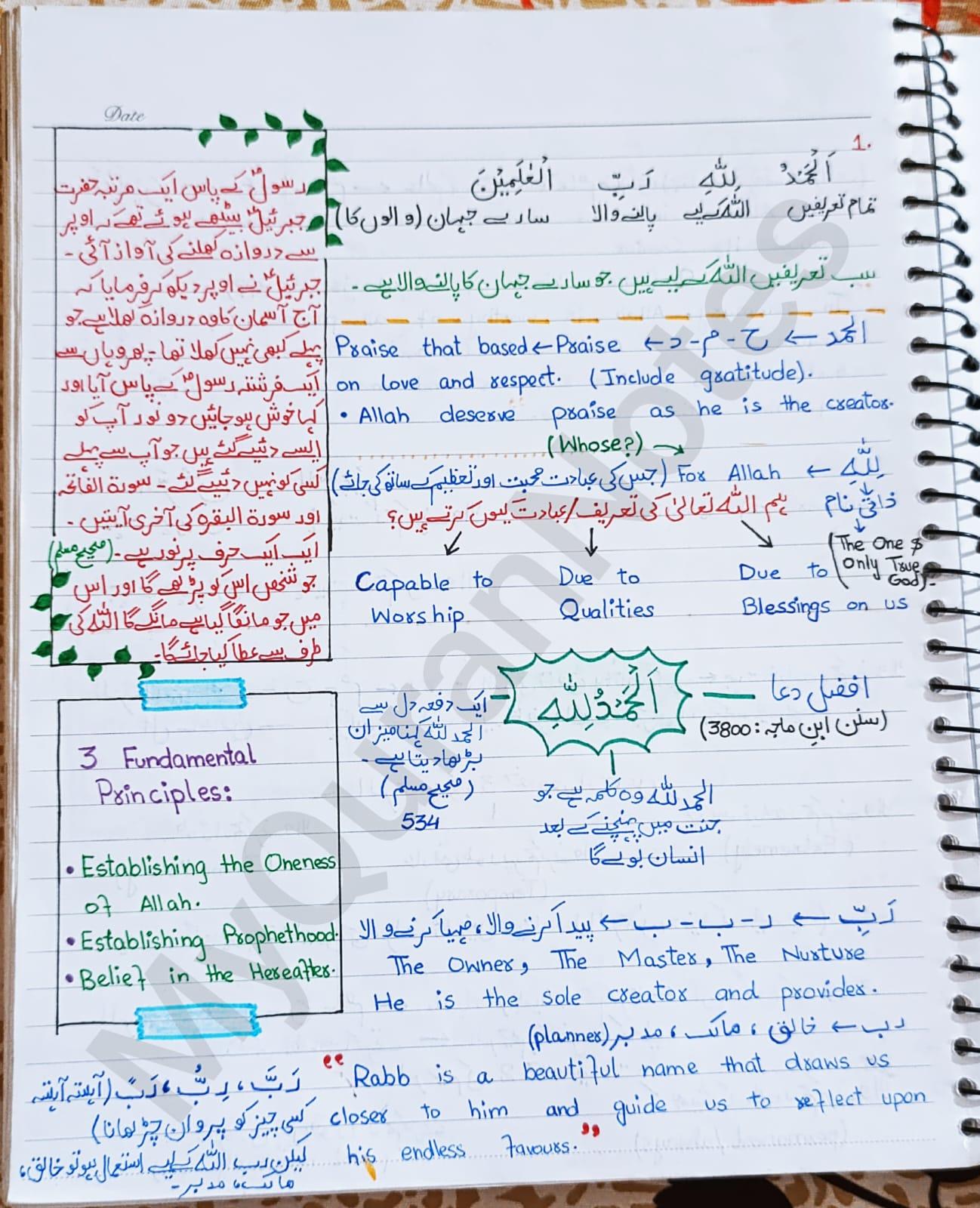
"Al-Hamd" (The Praise)
"Al-Hamd": This is the ultimate, comprehensive, and unconditional praise. It is praise that is due to someone purely for who they are, not just for what they have done for you. It encompasses love, respect, gratitude, and recognition of perfection.
"Al-Hamd" is this second, deeper type of praise. It is praise that is inherently and permanently deserved.
"Li" (For)
This tiny preposition means "for." It signifies possession and direction. All praise belongs to and is directed towards...
"Allah" (God)
The supreme name of the Creator, the One who possesses all perfect attributes.
So, when we put it all together, "Alhamdulillah" means:
“All praise—the comprehensive, perfect, and unconditional praise—is inherently, eternally, and exclusively for Allah alone.”
It is a statement of fact, not just a feeling. We are not giving praise to Allah as if He needs it from us; we are recognizing and declaring that all praise, in its essence, already belongs to Him. It is an acknowledgment of reality.
The Crown of the Quran - "Alhamdulillahi Rabbil 'Alameen"
We first encounter this phrase in its full glory in the second verse of Surah Al-Fatihah:
"Alhamdulillahi Rabbil 'Alameen."
(All praise is for Allah—Lord of all the worlds.)
This is not a random sentence; it is the headline of the entire Quran. Why is praise for Allah? The verse immediately gives the first and most fundamental reason: Because He is Rabbil 'Alameen.
The word "Rabb" is often translated as "Lord," but that is insufficient. "Rabb" is a comprehensive term that includes:
- The Creator: The One who brought everything into existence from nothing.
- The Sustainer: The One who provides for every single creature, from the largest star to the smallest microbe.
- The Owner and Master: The One who has absolute authority over all creation.
- The Caretaker and Nurturer: The One who guides everything towards its perfection and full potential. A seed becomes a tree because its "Rabb" has decreed and enabled that journey.
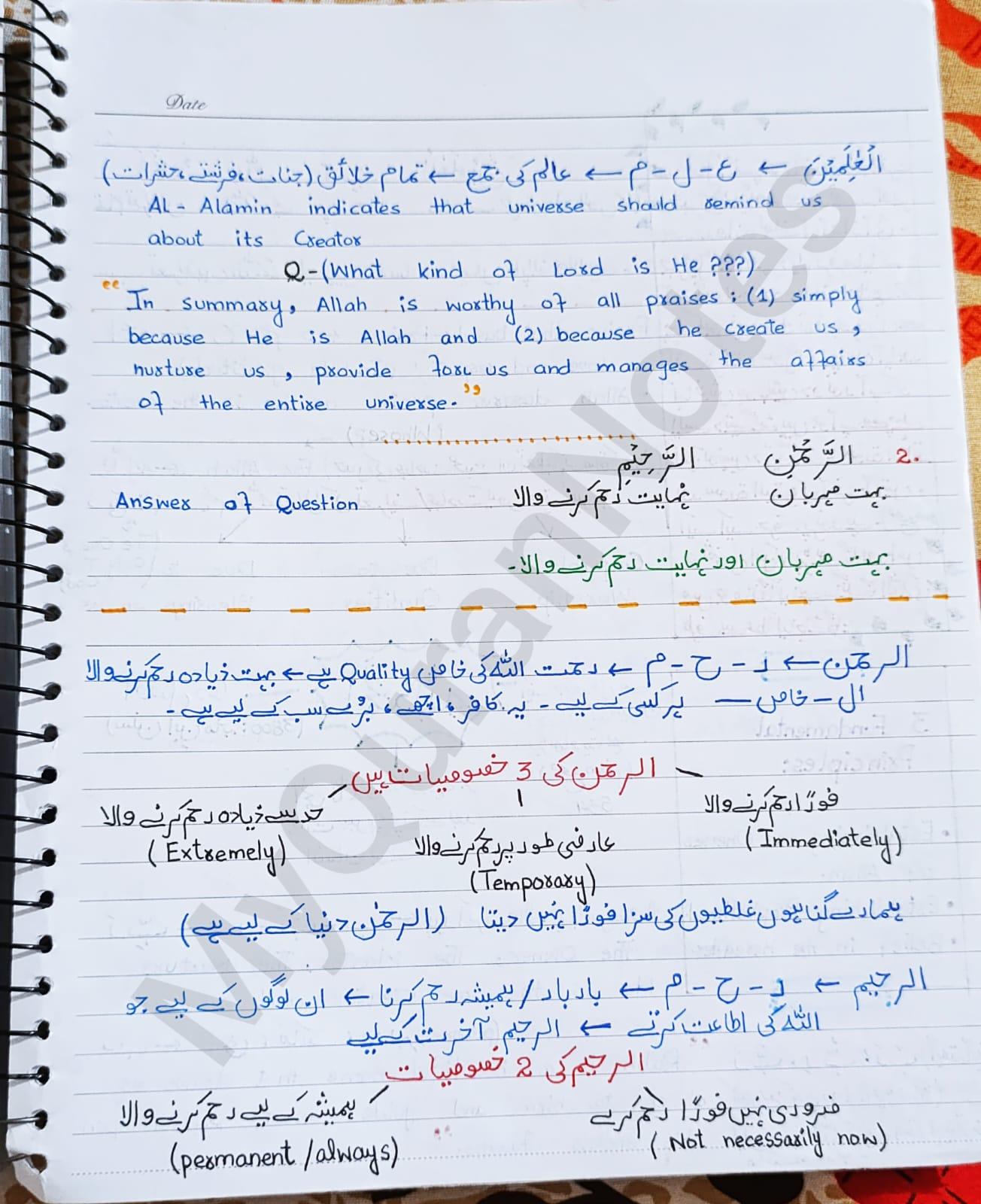
And He is not just the "Rabb" of one tribe or one planet. He is "Rabbil 'Alameen"—the Lord of all the worlds. This includes the world of humans, angels, jinn, animals, plants, galaxies, and every realm of existence we know of and those we cannot even comprehend.
Therefore, "Alhamdulillah" is the natural, logical response to recognizing the Lord of the Worlds. When you understand that the One who created you, provides for you, owns you, and nurtures you towards a purpose is Allah, your heart automatically proclaims, "Alhamdulillah!"
The Two Pillars of Alhamdulillah - Gratitude in Times of Ease and Difficulty
The true test and power of "Alhamdulillah" are revealed in how we live it. The Prophet Muhammad (peace be upon him) gave us the ultimate secret:
“How amazing is the affair of the believer! His affair is always good. If something good happens to him, he is grateful (Shakir), and that is good for him. If something bad happens to him, he is patient (Sabir), and that is good for him. And this is only for the believer.”
Let's explore these two pillars.
Pillar 1: Alhamdulillah as Gratitude (Shukr) in Times of Ease
When we receive a blessing—good health, a promotion, a beautiful sunset, a loving family—saying "Alhamdulillah" is an act of Shukr (gratitude).
But what does it mean to be truly grateful?
- Gratitude of the Heart (`Aql): To recognize and acknowledge within your heart that the blessing is from Allah alone. It is not solely the result of your own effort, your doctor's skill, or your boss's decision. All of these are merely means (Asbab) that Allah set in motion.
- Gratitude of the Tongue (Lisan): To verbalize this recognition by saying "Alhamdulillah." This public declaration reinforces the internal belief.
- Gratitude of the Limbs (Jawarih): To use the blessing in a way that pleases the One who gave it to you. If you are blessed with wealth, you use it for Halal purposes and give charity. If you are blessed with knowledge, you share it. If you are blessed with health, you use it to worship Allah and help others.
This comprehensive gratitude is what makes "Alhamdulillah" a reality on our tongues. It prevents arrogance. When we succeed, we know it is by Allah's grace, so we say "Alhamdulillah" and remain humble.
Pillar 2: Alhamdulillah as Faith (Iman) in Times of Difficulty
This is the higher, more profound level of "Alhamdulillah." Saying it when things are going wrong. How can we praise Allah for a loss, an illness, or a heartbreak?
This is where "Alhamdulillah" transforms from simple gratitude to deep, unwavering faith. It is not a praise for the pain itself, but a praise despite the pain, rooted in the unshakable belief in Allah's wisdom and mercy.
When you say "Alhamdulillah" upon facing a hardship, you are essentially declaring:
- "I believe this is from You, my Rabb." You affirm that nothing in the universe happens without Allah's knowledge and permission. This immediately removes the feeling of being a victim of random, chaotic events.
- "And because it is from You, I know there is wisdom in it." You trust that the One who is Al-Hakeem (The All-Wise) and Ar-Raheem (The Especially Merciful) would only allow something to happen that, in the grand scheme of your life and the Hereafter, contains a greater good—even if you cannot see it right now.
- "This difficulty is an expiation for my sins." The Prophet (peace be upon him) said, "No fatigue, nor disease, nor sorrow, nor sadness, nor hurt, nor distress befalls a Muslim, even if it were the prick he receives from a thorn, but that Allah expiates some of his sins for that." Saying "Alhamdulillah" in pain is an acceptance of this divine cleansing.
- "This is a test to raise my status in Paradise." The greatest rewards are often reserved for the greatest trials. By being patient and saying "Alhamdulillah," you are essentially earning a higher, eternal station in the Hereafter.
- "You are testing my patience and my reliance on You." The difficulty is a gym for your soul, strengthening your Sabr (patience) and Tawakkul (reliance on Allah)
How to Make Quran Tafseer Notes
A Practical Example: You miss your flight and are terribly inconvenienced. You later find out that flight crashed. Your initial hardship was, in reality, a immense blessing in disguise. We see this small example; Allah's knowledge encompasses all such hidden connections throughout our entire lives. Saying "Alhamdulillah" in the initial moment of frustration is an act of supreme faith in this unseen wisdom.
"Alhamdulillah" is, therefore, far more than two words. It is a lens through which to see the world. It is the core of a believer's identity.
- It is Gratitude that guards against arrogance.
- It is Patience that transforms trials into triumphs.
- It is Faith that sees the hand of the Merciful in every moment.
- It is Hope that trusts in a wisdom greater than our own.
- It is Love for the Creator who is worthy of all praise.
The next time "Alhamdulillah" rises to your lips, let your heart feel its weight. Let it be a conscious, powerful declaration that shapes your reality. Let your life become a walking, living, breathing "Alhamdulillah"—a continuous symphony of praise to the Lord of all the worlds.
Alhamdulillah for this faith. Alhamdulillah for this understanding. Alhamdulillah for everything.
I truly hope this deep dive into the meaning of "Alhamdulillah" has blessed you and brought you closer to the beauty of this powerful phrase. If you found this post helpful, please don't keep it to yourself—share it with your family and friends; you never know who might need this reminder today. To make sure you never miss these insights, follow me for more content on Instagram, WhatsApp Channel, Facebook and TikTok - list your specific handles here]. I would also love to hear from you, so please leave a comment below telling me what "Alhamdulillah" means in your life. May your days be filled with conscious praise and gratitude.

Leave a comment
Your email address will not be published. Required fields are marked *